How a Christian Should Vote
Ministries > Pathway to Victory with Dr. Robert Jeffress
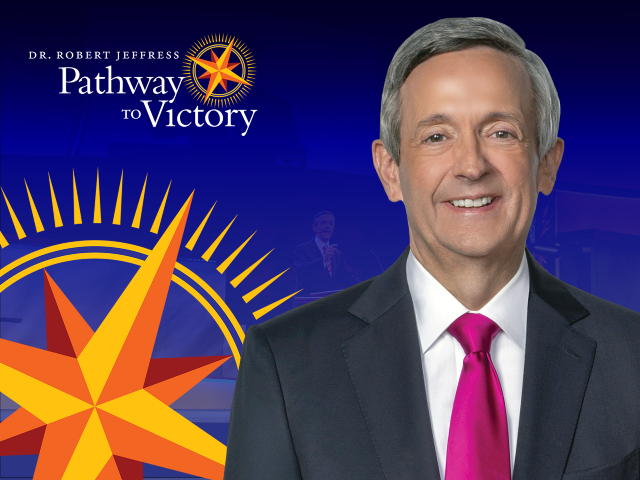
In today’s climate, “politics” has become something of a dirty word. Are politics even something Christians should engage in? Dr. Robert Jeffress addresses whether Christians should be involved in politics—and if so, which biblical principles we should take into account when marking our ballots.
To support Pathway to Victory, go to ptv.org/donate.
David: Hey podcast listeners, thanks for streaming today’s podcast from Pathway to Victory. Pathway to Victory is a nonprofit ministry featuring the Bible teaching of Dr. Robert Jeffress. Our mission is to pierce the darkness with the light of God’s word through the most effective media available, like this podcast. To support Pathway to Victory, go to PTV.org/donate or follow the link in our show notes. Now, here’s today’s podcast from Pathway to Victory.
Dr. Robert Jeffress: Hi, this is Robert Jeffress, and I’m glad to study God’s word with you every day on this Bible teaching program. On today’s edition of Pathway to Victory: We determine the spiritual direction of our country by the leaders we vote for. The fact is, the leaders we elect determine the policies that we follow. And the policies we follow as a nation determine whether we are a righteous nation or we are an unrighteous nation.
David: Welcome to Pathway to Victory with author and pastor Dr. Robert Jeffress. In today’s climate, politics has become something of a dirty word. Are politics something Christians should even engage in? Today on Pathway to Victory, Dr. Robert Jeffress addresses whether Christians should be involved in politics, and if so, which biblical principles we should take into account when marking our ballots. But first, let’s take a moment to hear some important ministry updates.
Dr. Robert Jeffress: Thanks, David, and welcome again to Pathway to Victory. In recent days, I’ve spoken with many people who are worried and anxious about the upcoming midterm elections in our nation. For that reason, I’ve set aside today’s program to infuse a strong dose of biblical hope into your voting decisions. Whether you’re in your 20s or your 90s, life on earth is brief, and that ought to press all of us to use our time wisely. The Apostle Paul put it this way in Ephesians chapter five: "Be careful how you walk, not as unwise, but as wise, making the most of your time because the days are evil." Well, that’s the very reason I sat down and wrote a short book to hand you seven important lessons I’ve learned across my 70 years so you can make the most of the days God has ordained for you. These seven lessons transformed my life, and I believe they’ll transform yours. When you give a generous gift to support the ministry of Pathway to Victory, I’m going to send you my book, *Seven Lessons From My 70 Years*. All right, let’s turn our attention now to the subject at hand. Speaking from the pulpit of First Baptist Dallas, I titled my message: "How a Christian Should Vote." Today we’re going to do something different. Today we’re going to talk about politics. Yuck. Just saying the word "politics" leaves a bitter aftertaste in your mouth. We understand why. With all the mudslinging, the political divisions in our country—a division that extends to friendships, to homes, and even to churches—we understand why people get skittish when you talk about politics. The only thing worse than the word "politics" is the word "politician." Can you think of a worse thing to call somebody? Being a politician is on the same level as being a drug dealer, child molester, or televangelist. We use it in a derisive term: "Oh, he’s just involved in politics," or "She’s a politician." We misuse the word and treat it with contempt. It really doesn’t make sense when you think about the etymology of the word politics. The word politics comes from a Greek word, *politica*, which literally means "the affairs of a city." To be involved in politics is to be involved in the affairs of a city, including its government. Does God care what happens in cities? Just read the Bible. God’s very interested in what happens in government. Should we be interested? Some people say, "No, no Christian should get involved in politics. Philippians 3:20: Our citizenship is in heaven." That’s true. Our ultimate destination is heaven, but right now we’re not in heaven; we’re here on earth. And we have responsibilities as Christians in the affairs of the city, the affairs of government. Let me show you why that’s true. In Matthew chapter five, part of the Sermon on the Mount, remember Jesus explained the two reasons he left us here as Christians on earth instead of taking us to heaven. He used two metaphors to describe what Christians are to do: "You are the salt of the earth. You are the light of the world." Salt and light. Light, we know what it is: sharing the light, the good news of Jesus Christ. But what is salt? In Jesus' day, salt was a preservative. There was no refrigeration. Salt was packed into meat. It couldn’t prevent the meat from decaying, but it could delay the meat’s decay. It gave the meat a little bit longer shelf life. And what Jesus was saying is, "I left you in this world to be a preservative, to slow down the rot, if you will, of society, so that civilization has a little bit longer to share the good news of Jesus Christ." We’re to push back against evil. Not that we’re going to save America, not that we’re going to save the world, but that we’re going to give the world a little bit longer to accept the gospel of Jesus Christ. And that means if we’re going to be salt, we have to get out of the saltshaker. We have to get out of our holy huddles, our churches, our spiritual silos, and we need to affect every part of this society. Christians need to be involved in the business world, in the entertainment world, in the educational world, and yes, they need to be involved in government as well. We have every right, we have every responsibility, to use whatever rights and responsibilities we have to further the gospel of Jesus Christ and to further God’s standard of righteousness. Now, what does that mean to us today? We determine the spiritual direction of our country by the leaders we vote for. By our vote, we get to choose the moral and spiritual direction of our country. The fact is, the leaders we elect determine the policies that we follow. And the policies we follow as a nation determine whether we are a righteous nation or we are an unrighteous nation. To say that God is not involved in elections or does not want Christians involved in elections is to say God doesn’t care about the spiritual or moral direction of a country. Can anybody read the Bible and say that with a straight face? Of course not. The leaders we elect determine the direction of our country. Well, with such diverse choices, how do I choose a candidate? I’d like to suggest to you four questions you ought to ask before you vote for any candidate. Question number one: Is the candidate a Christian? Now, let me be quick to say, being a Christian doesn’t automatically qualify you to be an elected official, certainly not president. In fact, I look back; some of our weakest presidents in American history were Christians. Being a Christian doesn’t make you qualified to be president. But, assuming both candidates are competent, I believe there are three reasons to prefer Christians over non-Christians as our leaders. First of all, Christians are more likely to enact godly principles than the non-Christian. Now, that doesn’t mean that non-Christians can’t embrace godly principles. They may see the poll numbers and determine that it’s politically advantageous to embrace a group of Christian beliefs. But what if the polls change? What if national sentiment changes? A non-Christian is more likely to abandon those Christian beliefs than a Christian who fears God. Proverbs 1:7 says, "The fear of the Lord is the beginning of knowledge; fools despise wisdom and instruction." A second benefit of having a Christian leader is that Christians experience the leading of God in their lives. Romans 8:14 says, "Those who are led by the spirit of God, these are the children of God." If you’re a child of God, if you know Christ as your savior, you have the Holy Spirit of God leading you. And finally, Christian leaders who uphold Christian values enjoy the unique favor of God upon their lives. The Old Testament is clear about this. When a believing king was installed and he followed godly principles, God not only blessed the king, he blessed the people the king ruled over. In the same way, when there was an evil king, God not only judged that evil king, he judged the nation that he ruled over. Proverbs 29:2 says, "When the righteous increase, the people rejoice, but when a wicked man rules, the people groan." Is the candidate a Christian? That’s the first question. Second question to ask: Do the candidate’s policies align with the Bible? Do the candidate’s policies align with the Bible? I’m about to offend everybody in this room. Breaking news: Not every issue is a biblical issue. Not every political issue is a biblical issue. Let me give you two examples of that. Polls show that the top two things people are concerned with in this coming election are immigration and the economy. Now, let’s look at immigration for a moment. We’ve got a problem at the borders; both parties acknowledge that. What does the Bible have to say about that? The Bible gives us some principles. God respects the borders of nations. God’s will was never for this world that we all exist under one nation, under one ruler, and hold hands and sing "Kumbaya" together. That has never been God’s plan. God is the one who willed for nations, distinct nations, to rule in this world. Acts 17 says God sets the boundaries. Romans 13 said government’s responsibility is to protect citizens of a country from those who would do evil, and that includes illegal immigrants. So, there’s a general principle that there ought to be laws that are obeyed, borders that ought to be protected. Well, what do you do about those illegal immigrants you already have in your nation? What do you do about children who, through no fault of their own, were born into the families of illegal immigrants? Do they get citizenship? What do you do about all of this? The Bible doesn’t delve into that. That is a political belief, and you’ve got people of both sides who are Christians on that issue of immigration. Or what about the issue of the economy? Well, you can look at the Bible and find some general principles about the economy. You can find that we shouldn’t borrow more money than we have. You can see that government is supposed to do good to those who are poor and aren’t able to work. But does the Bible tell us what the capital gains rate ought to be? No. That’s something politicians have to fight out and determine. What I’m simply saying is not every policy is a biblical policy, but some are. The Bible speaks very clearly about the sanctity of life. That is a biblical, not a political issue. The Bible speaks clearly about the sanctity of marriage. God created marriage to be one man with one woman in a sanctified home with children. That is God’s will. God designed the family. It is something that is sanctified. God cares about Israel. That’s not just a political belief; that is a spiritual belief. And what we need to do before we vote for any candidate is to see where the candidate stands, not on these secondary issues, but on key biblical issues. Do the candidate’s policies align with the Bible? The third question, especially in these days we need to ask, is: What is the candidate’s view of Israel? You say, "Well, why should that matter? Why is that a key issue?" Because however our nation decides to treat Israel determines whether we experience God’s blessing or curse as a nation. Whoa, how can you say such a thing? Well, because God said it. In Genesis chapter 12, listen to what he said to Abraham: "I will make you a great nation, I will bless you and make your name great, and you shall be a blessing. And I will bless those who bless you, and the one who curses you, I will curse, and in you all the families of the earth will be blessed." All you have to do is look at history and see those nations that treated Israel well and befriended Israel were blessed by God, and those that didn’t were confined and dispatched to the dustbin of history. God instituted Israel to be a human object lesson to the world of his divine power. He said to the world, "I’m going to establish this nation of Israel. And they may disobey me and suffer my discipline, but I will never forsake them. They will endure forever." Do you realize the United States doesn’t have that promise? We’re not going to exist forever. We’re going to crumble and collapse at some point. But God said Israel will endure forever. And so Satan said, "We’ll see about that." And he is the one who empowers these world forces to go against Israel. Behind Hamas, behind Iran, behind China, behind Russia, ultimately there is a satanic spirit that is encouraging these leaders to go against Israel. Why? To prove that God can’t keep his promises. But ladies and gentlemen, if we as the United States of America want God’s continued blessing on our country, we better get on the right side of Israel, because that is to be on the right side of God himself. That’s what the holy scripture teaches. Fourth, how do we evaluate candidates? Is the candidate a Christian? How do their policies align with the Bible? What do they say about Israel? Fourthly: Will the candidate get things done? How many times do we hear, "Oh, I like so-and-so’s policies, but I just don’t like their personality. They’re too brash, they’re too pigheaded, they’re too combative, they’re too crass." Now, admittedly, those are characteristics you don’t want in your pastor. But we’re not voting for a pastor in this next election. We’re voting for a president who can get things done, who can get the right things done. And it’s okay to divorce a person’s policies from their personality or other areas of their life. And by the way, both sides do it all the time. Both sides divorce policy from personality. For example, think about the left. For years, they’ve idolized Franklin Roosevelt, Martin Luther King Jr., John F. Kennedy, Lyndon Johnson. You know what all of those charismatic leaders had in common? All those men were known adulterers, every one of them, that abused women. Every one of them. Every one of them. But the left supports them. Why? I’m going to give them grace here. They support them not because they’re abusers of women or because they’re adulterers. They support them because of their policies of civil rights and freedom and so forth and so on. They’ve separated policy from personality. What I’m saying is, both sides understand the need to separate policies from personality, and that’s the best that we can hope to do. Now, I admit these four questions are subjective, but hopefully they give you some guidelines to use. Now, let me close today by talking about how to make a difference in the election. Let me just briefly summarize what I believe our Christian responsibility is. First of all, participate in the process. I think it is a travesty that 50 percent of evangelical Christians don’t vote in elections. If you’ve not registered to vote, get signed up to vote. But when I talk about participating in the process, some people will say, "Well, I just don’t like either choice. I’m just going to sit this one out." If that’s your attitude, I would like to give you two pieces of advice: one from Kamala Harris and the other from Barack Obama. I bet you never thought you would hear me quoting either one of them. But even a broken clock is right twice a day, and I hope you heard what they said at the Democrat convention because they really were good words. Kamala Harris said, "Don’t wait for a Goldilocks environment. Don’t wait to vote for a Goldilocks environment." What does she mean? Don’t insist that everything be just right before you vote for a candidate. Everything will never be just right in a fallen world. Don’t wait for a Goldilocks situation. And Barack Obama, his words: "Don’t let the best become the enemy of the good." Don’t allow holding out for something perfect—perfection—keep you from doing what is good. We have imperfect candidates because we are imperfect people. Participate in the process. The alternative to participating in the process isn’t a good one. Remember Benjamin Franklin, when he emerged from the Continental Congress, a woman went up to him and said, "Mr. Franklin, what kind of government have you given to us?" He said, "A Republic, madam, if you can keep it." It takes work to keep a Republic. It takes work to keep a democracy. And if we don’t exercise that effort, a democracy can quickly be replaced by tyranny. Participate in the process. Secondly, vote on the basis of facts, not rumors. In this age of social media, artificial intelligence, the ability to deceive people is higher than it’s ever been before. And that’s why we need to verify every piece of information we’re given. And thirdly, what is our responsibility in this election? Trust in God’s sovereignty. Listen to me. We are representatives of God Almighty, the King of kings and Lord of lords. And as God’s representative, we don’t help his cause any when we’re running around hyperventilating over the election. "Oh, I’m so afraid of what’s going to happen, what’s going to happen. Oh, if so-and-so wins, it’s going to be the end of our country." No, it’s not. God will say when the end of this country has come, nobody else. As Christians, we need to exhibit trust in our Heavenly Father. I said it earlier; I’m going to say it again. The biggest objection to Christians getting involved in politics is the idea that somehow we’re imposing our faith on other people. But people who say that miss one important point that the late Charles Colson highlighted in a commentary. He said as citizens of the kingdom of God, Christians are to bring God’s standards of righteousness and justice to bear on the kingdoms of this world. What is sometimes called the cultural commission, among other things, this means bringing transcendent moral values into public debate. But get this: The popular notion that you can’t legislate morality is a myth. Morality is legislated every day from the vantage point of one value system that’s chosen over another. The question is not whether we legislate morality, but whose morality we legislate.
Related Episodes
How Can I Prepare For My Journey To Heaven? – Part 2
Friday, October 2
How Can I Prepare For My Journey To Heaven? – Part 1
Thursday, October 1
America Is A Christian Nation – Part 2
Tuesday, September 29
Related Videos

About Pathway to Victory
On each daily broadcast, Dr. Robert Jeffress provides practical application of God's Word to everyday life through clear, uncompromised Biblical teaching. Join him today on the Pathway to Victory!
About Dr. Robert Jeffress
Dr. Robert Jeffress is Senior Pastor of the 16,000-member First Baptist Church of Dallas, Texas. Dr. Jeffress is a FOX News contributor and appears regularly on FOX News Channel’s FOX & Friends , FOX News @ Night , Hannity , and The Faulkner Focus and on the FOX Business Network. Dr. Jeffress has made more than 4,000 guest appearances on television programs that include HBO’s Real Time with Bill Maher and Trinity Broadcasting Network’s Praise .
Established in 1996, Pathway to Victory serves as the broadcast ministry of Dr. Jeffress and exists to pierce the darkness with the light of God’s Word through the most effective media available. The daily radio programs air on over 1,100 stations, and the daily television program can be seen on over 11,000 cable and satellite systems, including Trinity Broadcasting Network (TBN), where it has been the #1 most-watched program since 2020. Pathway to Victory broadcasts are translated into seven languages and reach 193 countries throughout the world in addition to all major markets in the USA.
Contact Pathway to Victory with Dr. Robert Jeffress
Mailing Address
Pathway to Victory
PO Box: 223609
Dallas, TX 75222-3609
Telephone Numbers
Customer Service: 214.969.2400
Toll-Free Radio Offer: 866-999-2965


