Mark 1:1-15
Ministries > Thru the Bible with Dr. J. Vernon McGee
https://www.oneplace.com/ministries/thru-the-bible-with-j-vernon-mcgee/
Facebook Twitter Instagram YouTubeWhat were the differences in the ministries of John the Baptist and Jesus? In this rich beginning of Jesus’ public ministry, come learn the significance of baptism, repentance, and what the kingdom of God really means.
References
Steve Schwartz: The Bible tells us about three different beginnings. In Mark chapter 1, our teacher Dr. J. Vernon McGee explains the difference between them and then introduces us to what he calls the beginning of the gospel. Welcome to Through the Bible. I'm your host Steve Schwartz and I'm glad that you're aboard the Bible bus as we begin our journey through the gospel of Mark. So grab your Bible and find your place and as you do, let's listen to a brief message from Dr. McGee about Through the Bible's policy regarding financing the ministry.
Dr. J. Vernon McGee: It has never been our plan of purpose from the very beginning to use high pressure methods. We do not send out junk mail. Everyone that's on our mailing list got there because they asked to be put there or else someone asked for them. We today believe that if you are not able to support the program and you want our notes and outlines that God will raise up somebody down the street or over in the next town to send in enough for you and for them also. We believe that the real test is the support that comes from any area. And we will not continue on a program if we do not get a reasonable amount of support. And we always give every station a fair opportunity to see if it's going to pay for itself. And that by the way is all that we ask. We do from time to time appeal to you to support our foreign broadcasts. After all, we cannot ask them uh that is the Chinese or the people of India or the people of South America or the people in Russia to support our program. We believe that there are enough folk in this country that are interested in getting out the word over iron curtains, under bamboo curtains, and through the curtains of indifference and sin today uh to get the word of God out to the world. So we just let you know this and trust you'll understand that we do need your support. Though we will not violate our rule by using high pressure methods.
Steve Schwartz: Well, whether you're able to invest a little or a lot, your support is equally appreciated and valuable as we follow Dr. McGee's vision of taking God's whole word to the whole world. And of course, the most important thing that you can do is support through the Bible with your faithful prayers. To find out about how you can partner with us, just call us at 1-800-65-BIBLE or click on give in our app or at ttb.org. And if you'd like to join our special group of committed prayer warriors, we call ourselves the World Prayer Team. You can sign up today at ttb.org. Let's pray. Heavenly Father, thank you for your love that you've expressed through the gift of your son Jesus. As we learn about him, Lord, please fill us with your grace and mercy. Give us a heart to hear and share what we're learning about you in the word. We ask this in Jesus' name. Amen. Turn now to Mark chapter 1 as we go through the Bible with Dr. J. Vernon McGee.
Dr. J. Vernon McGee: Now today, friends, we return back to this first chapter, the gospel of Mark and verse 1. This is a chapter that is just chuck full of action, for Mark is the gospel of action. Now there are very few quotations from prophecy in the gospel of Mark actually. He's writing to the Romans. They knew very little about the prophetic scriptures and therefore he does not quote but about two references, but he opens with them and he does not give his genealogy and it says the beginning of the gospel of Jesus Christ. Now I'd like to spend just a moment there today and that expression. There actually in scripture are three beginnings. That first beginning is not in Genesis but in John 1:1. In the beginning was the word. The word was with God and the word was God. That goes back to a dateless beginning, a beginning before all time. It's a logical rather than chronological because in my thinking I have to put down my pegs somewhere in the past in order to take off. If there's an airplane in the air, I assume that there's an airport somewhere. I may not know where it is, don't know where it came from, but I have to assume it took off somewhere. So that when you come into a universe as I did quite a few years ago and look around me, I know somewhere it took off. And I know that somewhere there is a God. And I know somewhere that there is this one, the Lord Jesus. Now what about the beginning? Well, I don't know. I can answer that. He comes out of eternity to meet us, but I just have to put down the pegs back there somewhere where he does meet us. Far back as I can think, that is the airport. He took off. I don't know where or how, but the very fact that he existed means he took off somewhere. Now we have a second beginning and that's actually the one in Genesis and that 's when you move into time. That began at sometime in the past. I do not know when. I do not think anyone does. They attempting to date this universe. I remember when I was in school, I think it went to 2 million years. Then I think it advanced to 200 million years and now it's gone to 2 billion years. And since they've made the trip to the moon and brought back those rocks, why they've come to the conclusion it's now 3 billions of years. And I have a notion if they could get out a little farther, get a few rocks from Mars, they might think it 's 5 billion years. And the chances are it's older than that. It may be several trillion years old. It could be really squillions of years old. After all, our God is a God of eternity and he's not pushed for time. I mean, after all, he's been around a long time and so is the universe. And man just hadn't been around very long. He's the Johnny come lately on the scene and we don't seem to know too much about our universe. I think someday when we get in his presence and we really began to know then even as we're known and now we see through a glass darkly and then face to face, I think we'll marvel at our stupidity and our ignorance and how little we really did know and that what is called wisdom today actually is foolishness with God. And that because we don't have any kind of thought patterns to fit God's thoughts onto why the wisdom of God seems like it's foolishness to man, you see. Now there's another beginning and that's called the beginning of the gospel. John in his first epistle says that which was from the beginning. Well, that's what Mark's talking about here, the beginning of the gospel. And both John and Mark take us to the beginning of his ministry. And what you have here is the beginning of the gospel. So that don't stop with the teachings of Jesus or stop with the miracles of Jesus and say this is the gospel. His teachings as we saw in the book of Exodus is not the gospel. And we quoted from a president of a seminary here in California that made the statement. He's supposed to be conservative, but he's certainly not to say that the teachings of Jesus if followed that is what we need to do and even man who denies deity can follow his teachings and bring peace in the world. I challenge that statement of course. Now the beginning of the gospel, we need to keep that before us. I think frankly that Paul and John Mark were very good friends now and John Mark had probably seen the epistle to the Romans and got the facts of the gospel from Simon Peter, but he got the interpretation of the gospel from Paul. And he says, now I want to go back and give you the facts of the gospel. That is these things that have to do with the coming of Christ into the world and his experience here for 3 years in a public ministry. That is the beginning of the gospel. We need to keep that before us. Now this was according to the prophet, behold I send my messenger before my face. Now that was John the Baptist. Now I begin reading here at verse 3, the voice of one crying in the wilderness, prepare ye the way of the Lord, make his paths straight. Now that was John. And Mark says that the coming of John was the fulfillment of that. And our translation reads, John did baptize in the wilderness and preach the baptism of repentance for the remission of sins. And I'd like to change that because it needs to be changed, friends, in order that we can get at the meaning that is shared. And that meaning I think is very important for us to see. Now I'll read it like this. John came baptizing in the wilderness and preaching the baptism of repentance unto the remission of sins. That's very important to see. Now he did not baptize for the remission of sins. It was unto the remission of sins. His ministry was preparatory. It was preparing them for the coming of the Lord Jesus Christ into the world. I think that's very very important for us to see that it's preparing, if you please, preparing them for the coming of the Lord Jesus. And that was his preaching and that was his baptizing and that was the purpose of it. It was a preparation for the coming of Christ into the world. Now verse 5, there went out unto him all the land of Judea and they of Jerusalem and were all baptized of him in the river of Jordan confessing their sins. And John was clothed with camel's hair with a girdle of a skin about his loins. He did eat locusts and wild honey. Now we'll have occasion to refer to John the Baptist again. But here was remarkable not only in his message, but he was remarkable in his dress and he was remarkable in his diet. This man was one that had been set aside for this ministry. He was of the order of the priests. He was a Levite and he should probably been ministering in the temple in Jerusalem, but God has called him now as a prophet and he's out there in the wilderness and people went to him. We today like to put a church and a location where people live or where people congregate or where they can come. The church should be accessible. We feel John didn't work on that theory at all. He was way out yonder in the wilderness and the multitudes went to him. And now we are told he preached saying, there cometh one mightier than I after me, the latchet of whose shoes I am not worthy. Now notice that I am not worthy to stoop down and unloose. Now that reveals something of how remarkable this man really was, this man John. And this man stirred the multitudes as we've seen. And the very wonderful thing was that John was a strange and strong man, but his was a solo voice. His dress and diet were different. And then note his humility here. He was an humble man. There's coming one greater than I am. And now we read here, I indeed have baptized you with water, but he shall baptize you with the Holy Spirit. Now that is the great distinction between the two. The real baptism is the baptism of the Holy Spirit. Ritual baptism is by water and I personally believe it's very important today because it's a testimony as we've said before. And in the gospel of Matthew, we said that the reason that the Lord Jesus was baptized was actually to identify himself with mankind. And we find here and I'm reading now verse 9, it came to pass in those days that Jesus came. Notice that headline. Jesus came. What a thrill. And he's coming someday. That's another wonderful headline. And one day it'll be true, Jesus came. It came to pass in those days that Jesus came from Nazareth of Galilee and was baptized of John in Jordan. The Lord Jesus came from the obscurity of 30 years of quiet training in little Nazareth. And you'll find that he came now and identifies himself with the human family in his baptism. It's identification with the human family. Remember he told John suffer it so now. John didn't want to baptize him as you know. Now you'll notice the name Jesus is used here. Jesus came and we'll find it's the common name that's used in this gospel here. It's more frequently used in Mark than any other name. Now here in verses 10 and 11, you have the trinity brought together in a very definite way. And straight way coming up out of the water, he saw the heavens open and the spirit like a dove descending upon him. And there came a voice from heaven saying, thou art my beloved son in whom I'm well pleased. Now you have the Lord Jesus here, the second person of the Godhead and the spirit of God comes like a dove upon him. That's the third person. And a voice out of heaven, the father says this is my beloved son, the first person of the Godhead. The trinity is brought to our attention and this by the way is heaven's seal upon the person and the dedication of Jesus. Now will you notice the thing that happens is happening fast here. He is the servant. John the Baptist here is the one that introduces him. And now God the father identifies him and puts his seal upon him. Now the temptation will initiate him. Now notice verse 12 and immediately the spirit driveth him into the wilderness. Now I would have you note that that the spirit driveth him into the wilderness. That is a word of fierceness and seriousness that the spirit of God just as it were moved him right out into the wilderness that he might be tempted. This is something that is very important for us to see. And we find here that the question is, can he do the job? Other men have failed. They couldn't stand up under temptation. Adam didn't make it. He failed. Noah actually got through the flood and then he failed miserably upon his face. And then Abraham, we saw that Abraham failed and Moses did who wasn't even permitted to enter the promised land and yet he led the children of Israel out of Egypt. And poor David failed. Now the temptation therefore initiates him into his work. And now will you notice here verse 13, and he was there in the wilderness 40 days. Now we do not have the details given that you have in Matthew and in Luke. But all we're told here that he was in the wilderness 40 days tempted of Satan. And he was tempted during the whole 40 days. The impression some people seem to get is that he fasted 40 days and then Satan tempted. My friend, he was tempting him all the time. 40 days it went on and he was tempted of Satan and was with the wild beasts and the angels ministered unto him. Now again I'd like to correct something. The idea is that he was there tempted of Satan and that the wild beasts more or less contributed to the temptation. That's not true. What Mark is saying here was with the wild beasts and the angels and they both ministered to him. That is the creation beneath him as man ministered to him. And that's the reason God created these creatures. If you remember Genesis, everything was a preparation to make a home for man. And friends, it's no accident that on this earth as far as we know it's the only place that there is mankind. And to try to say today because in the other galactic systems you have the same situation that you must have man there. That is highly presumptive to make a statement like that. You don't know a thing, friends. And far as we know, this is the only habitable place for creatures such as we are today. We have to have air to breathe and water to drink and food to eat and we need an environment. And God gave man a good ecology. And it's man that's ruining that. And I'm glad to be able to use that word because it's become very popular in our day. I'm sure many of us didn't know what it was. I sense it came from oikos which means house and it has to do with the philosophy of your home where you live. And it has to do we it say of our environment. And it could have something to do with the payments you make on your house by the way. It could be that just as easily as far as the Greek word is concerned. Now the beast below ministered to the Lord Jesus after the temptation and the angels above him ministered to him. And that's what John Mark is saying here. Now after the temptation, we find that the Lord Jesus now begins to move. And what we have here is the fact that he's beginning now a ministry. And we find that works and words illustrate the servant. And we see him now beginning a ministry that will take him actually up to the cross. Now let me read verse 14. Now after that John was put in prison, Jesus came into Galilee preaching the gospel of the kingdom of God. Now actually of the kingdom is not in the better manuscripts. And I personally think it should be preaching the gospel of God and saying the time is fulfilled and the kingdom of God is at hand. Repent ye and believe the gospel. Now I probably need to pause here for a moment to make this statement. And we find here that again Jesus came. Now after the John was put in prison, Jesus came in the Galilee. Begins his ministry now. And preaching the gospel of God saying the time is at hand and the kingdom of God is at hand. Now over in Matthew it was the kingdom of heaven. Did he use both terms? And he did. Is there a distinction between the two? There is. And there also is an overlapping. The kingdom of heaven is God's rule over the earth. The kingdom of God includes his entire universe and even beyond the bounds of this earth. So the kingdom of heaven is in the kingdom of God. The fact of the matter is Matthew is applying it specifically to this earth. And Mark is reaching out and seeing a wider area here that the kingdom of God would be the all embracing universe of God including all of his creatures. The kingdom of God is at hand. And I think they can be used in a synonymous way. Therefore as it relates to the earth, it can be said it's the kingdom of heaven or the kingdom of God. But the kingdom of God would reach beyond the earth. The kingdom of heaven as I understand it is just the reign of the heavens over the earth. And now his message is the same as John's was as we saw in Matthew, repent ye and believe the gospel. But now we have this matter of faith. And I believe that today that's actually been turned around, that faith comes before repentance. When you turn to Christ, you will turn from something. You turn to Christ in faith. And when you turn to him in faith, you turn from something. And that turning from something is repentance. If there is not that turning from something, apparently there was not that turning to. And you can be sure of one thing, if there was that turning to Christ, you're going to see in the life a turning from something. So you do not have a contradiction here at all. They're to believe now in the gospel. That is the thing that is important. Now we'll have to leave off there today, but next time we'll follow on this busy day that our Lord have. May God richly bless you, my beloved.
Steve Schwartz: If you want some more information about how you can turn to Christ, just click on how to know God in our app or at ttb.org. And remember you can always call 1-800-65-BIBLE to have a few free resources sent by mail. And for those of you who'd like to listen to this message again or maybe share it with a friend, it's available along with an entire virtual library of Bible study materials right from our app or go online. Again you'll find us at ttb.org. We're just getting started in the book of Mark. It's a good one, so be sure to join us next time as we explore more great truths found in God's word. Until then I'm Steve Schwartz praying for you to grow deeper in his word and that you believe God sooner, more completely, and with much joy.
Dr. J. Vernon McGee: Well, ride the Bible bus for 5 years and you'll be amazed at what God teaches you from his word about what it means to believe on the Lord Jesus Christ and you will be saved. It's a blessing that keeps on going. That's what we believe at Through the Bible.
Related Episodes
Mark Intro—1:3
Friday, October 16
Exodus 39, 40
Thursday, October 15
Exodus 38
Wednesday, October 14
About Thru the Bible
Thru the Bible takes the listener through the entire Bible in just five years, threading back and forth between the Old and New Testaments. You can begin the study at any time. When we have concluded Revelation, we will start over again in Genesis, so if you are with us for five years you will not miss any part of the Bible.
Other Thru the Bible Programs:
Thru the Bible - Minute with McGee
Thru the Bible - Questions & Answers
Thru the Bible - Sunday Sermon
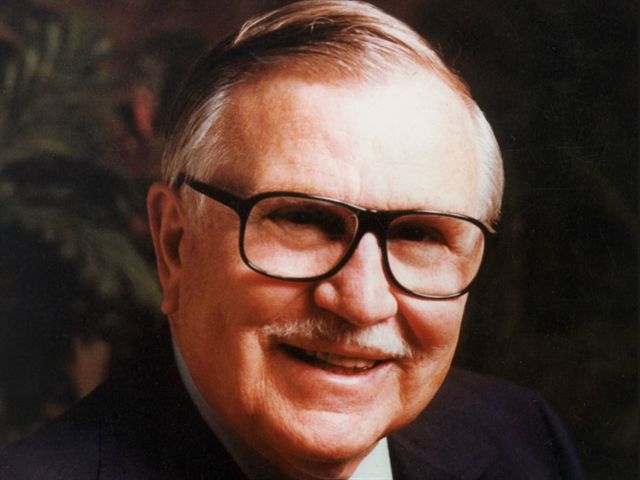
About Dr. J. Vernon McGee
John Vernon McGeewas born in Hillsboro, Texas, in 1904. Dr. McGee remarked, "When I was born and the doctor gave me the customary whack, my mother said that I let out a yell that could be heard on all four borders of Texas!" His Creator well knew that he would need a powerful voice to deliver a powerful message.
After completing his education (including a Th.M. and Th.D. from Dallas Theological Seminary), he and his wife came west, settling in Pasadena, California. Dr. McGee's greatest pastorate was at the historic Church of the Open Door in downtown Los Angeles, where he served from 1949 to 1970.
He began teaching Thru the Bible in 1967. After retiring from the pastorate, he set up radio headquarters in Pasadena, and the radio ministry expanded rapidly. Listeners never seem to tire of Dr. J. Vernon McGee's unique brand of rubber-meets-the-road teaching, or his passion for teaching the whole Word of God.
On the morning of December 1, 1988, Dr. McGee fell asleep in his chair and quietly passed into the presence of his Savior.
Contact Thru the Bible with Dr. J. Vernon McGee
Mailing Address
Thru the Bible, Inc.
P.O. Box 7100
Pasadena, CA 91109
In Canada:
Box 25325,
London, Ontario
N6C 6B1
Phone Number
(626) 795-4145 or
(800) 65-BIBLE (24253)


