What Should Christians Really Look for in a Church?
Guest Commentary

Audio By Carbonatix
By Shawn Paul Wood, Crosswalk.com

Key Points
- Church architecture, size, worship style, and programming may differ widely without determining whether a congregation is faithful.
- Christians should be careful not to approach choosing a church primarily as consumers searching for the longest list of benefits.
- Different churches can serve different communities while remaining united around the same gospel and the same God.
- Acts 2:42 points Christians toward teaching, fellowship, breaking bread, and prayer as important marks of Christian community.
- Choosing a church should include asking whether it helps believers worship God, grow as disciples, serve others, and participate in the life of Christ's body.
There's something magical about walking into Costco or Sam’s Club. Everything you could want is somewhere inside that enormous warehouse: groceries, furniture, electronics, prescription glasses, dog food, and even a vacation to Cabo.
You came for toilet paper and left with a rotisserie chicken, a 75-inch television, and a kayak. In green, because why not? You don't own a lake, but you like that color and the price was unbelievable.
Has anyone been there? Of course you have, and you called it “bargain shopping”— that’s the funny thing. Now, imagine choosing a church the same way.
We want outstanding children's programs, a youth ministry our teenagers won't hate, professional worship music, small groups, counseling, convenient service times, and coffee that doesn't taste like it was filtered through an old gym sock.
Naturally, the music must sound like a stadium concert and that pastor should preach like Bishop T.D. Jakes, Billy Graham or Joyce Meyer, right?
There's nothing wrong with wanting these things. Churches should serve their communities well. Yet somewhere between shopping for groceries and shopping for a congregation, we may have confused having everything we want with finding everything we need.
While reading this, ask yourself: Are we evaluating churches as communities of faith or businesses competing for our attention?
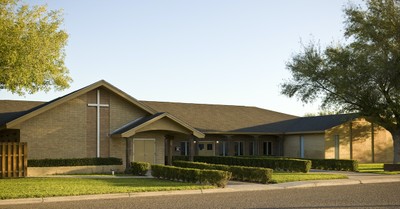
Does a Church Need to Look Like a Church?
For decades, many congregations have traded steeples and stained glass for modern auditoriums and multipurpose buildings. The thinking seems reasonable. Make the environment comfortable, remove unfamiliar religious imagery, and perhaps people who would never enter a traditional sanctuary will feel welcome.
But what if we've misunderstood what people want?
A Barna Group and Aspen Group study, reported by Christianity Today in March 2025, found that nearly 90% of Americans believe a church should be easily recognizable. And 80% wanted church buildings to reflect God's beauty. Believe it or not, only 28% preferred trendy architecture.
The research surveyed 2,000 American adults, including people who rarely or never attend church. Apparently, people don't necessarily mind a church looking like a church.
That doesn't mean stained glass is holier than drywall, or those creaky pews have more salvation than a padded theater seat. A congregation meeting in a converted warehouse can proclaim the gospel as faithfully as one worshiping beneath a century-old steeple.
Architecture communicates something, however. So does the decision to remove nearly everything that makes a sanctuary recognizable. The more interesting question is what we're communicating about the purpose of gathering in the first place.
What Can the Tower of Babel Teach Today's Churches?
Here's where an ancient construction project offers an unexpected perspective.
Genesis 11:1–9 describes humanity gathering on the plain of Shinar to build a city and a tower reaching toward heaven. Everyone spoke the same language. Everyone shared the same ambitious vision. Cooperation was apparently excellent.
They had the original megaproject: one language, one location, unlimited expansion opportunities. Somebody probably suggested a membership program. Their stated ambition reveals the problem.
"Let us make a name for ourselves," they declared, "lest we be dispersed over the face of the whole earth" (Genesis 11:4, ESV).
The Hebrew expression na'aseh-lanu shem means "let us make a name for ourselves." Their project was about reputation and security. They wanted to establish their own greatness while preventing the very scattering that would populate the earth.
Almost reads like narcissism; God would never have a problem with someone who wants to make themselves more popular than the Father. (Yes, Satan, we’re talking about you.)
Earlier, God had instructed Noah's descendants to be fruitful, multiply, and fill the earth (Genesis 9:1). The builders of Babel wanted something different.
God confused their language, and the people scattered (Genesis 11:7–9). The story doesn't condemn large buildings, organizational excellence, or people working together. It exposes the danger of pursuing human greatness while neglecting God's purposes.
Babel wasn't a failure of organizational capacity. It was a failure of spiritual priorities.
And perhaps that's the question every church, regardless of size, should be asking itself. Not how much we can build, but why we are building it.
A megachurch isn't another Tower of Babel because it has 5,000 members and a flashy bookstore. And a small congregation isn’t automatically full of members more faithful because it meets in a building with wooden pews and a steeple.
Both can become more interested in preserving an institution than fulfilling its calling.
The issue has never been how impressive the structure is. It's whether the people inside remember whom they're serving.
Why Don't All Faithful Churches Look the Same?
Centuries after Babel, people from different nations gathered in Jerusalem for Pentecost. When the Holy Spirit came upon Jesus' followers, they began speaking in other languages. Visitors heard the mighty works of God proclaimed in their native tongues (Acts 2:1–11).
At Babel, language became a barrier to humanity's self-directed ambition. At Pentecost, language became a means of communicating God's redemptive work.
Notice what didn't happen. Not everyone was required to abandon their language and adopt a universal Christian vocabulary. The gospel reached people through their differences.
Paul develops a related principle in 1 Corinthians 12:12–27. He describes the church as one body with many members, each serving a different purpose.
The Greek word sōma, meaning "body," is central to Paul's illustration. A body functions because its members aren't identical. Eyes, ears, hands, and feet contribute differently to the health of the whole. And, if you’ve ever noticed, they certainly don’t look the same from person to person.
Paul was addressing spiritual gifts and relationships within the church of Corinth, not prescribing architectural styles or church sizes. Still, his teaching challenges the assumption that Christian communities must look or function identically to be faithful.
A rural church serving a community of farming families may have different ministries from an urban congregation reaching university students. Neither needs to copy the other's programming to fulfill its calling; they need to serve the same God.
Breaking News: Unity in Christ doesn't require a dress code or uniformity in ministry.
Can a Small Church Offer Something a Megachurch Cannot?
Walk into a church away from the Burbs on Sunday morning, and you'll understand why attendance figures don't tell the whole story.
There may be 200 people, wooden pews, and a Hammond B3 organ that sounds as if it were personally commissioned to wake the dead. Somebody starts singing, somebody else catches the Spirit, and before long the congregation is praising God with enough enthusiasm to concern the local fire marshal.
Visit a much larger church, and you might encounter extraordinary preaching, thoughtful discipleship programs, and thousands of people worshiping together.
You might also find people clapping on beats one and three and couldn’t carry a note if it was in their backpack.
All churches have flaws. Each size has benefits over the other. But that’s the thing: It’s supposed to be subjective where you put your family. Thinking of Babel, there was nothing subjective there. It wasn’t a family tree—it was one long branch.
Large congregations can offer resources smaller churches cannot afford. Go inside one, and you’ll see specialized ministries, read about extensive community outreach, and hear about support for families facing difficult circumstances. Those are all genuine expressions of Christian service.
Conversely, smaller churches may offer closer relationships, face time with the pastor, opportunities for meaningful participation, and personal care that larger organizations must deliberately cultivate. Those, too, are faith-based outreach.
Neither advantage is guaranteed. Why? Both can make someone feel isolated or controlled, or lead to leaders who resist necessary change. The New Testament never establishes a minimum or maximum attendance requirement for a healthy church. All that matters in Scripture is how to measure faithfulness.
What Should Christians Look for in a Church?
Acts 2:42 describes the earliest Christian community devoting itself to the apostles' teaching, fellowship, breaking bread, and prayer.
The Greek word proskartereō, translated "devoted," carries the sense of persistent, attentive commitment. These practices weren't occasional attractions on a ministry calendar. They shaped the community's shared life.
Maybe today’s devoted should ask themselves these before deciding:
Does the church teach Scripture faithfully and responsibly (2 Timothy 4:2)?
Does worship direct attention toward God rather than the people onstage (John 4:23–24)?
Are believers developing genuine relationships and caring for one another (Galatians 6:2)?
Are people growing as disciples who follow Jesus beyond Sunday morning (Matthew 28:19–20)?
Does the congregation demonstrate Christ's love through its actions (John 13:34–35)?
These questions demand more than a tour of the church's children's wing. They also require something from us.
Paul's description of the church as a body means believers aren't merely recipients of religious services. They're participants with gifts and responsibilities (1 Corinthians 12:18–27).
Church membership isn't supposed to resemble a warehouse membership, where paying your dues grants access to an expanding list of benefits. Christian fellowship involves contributing to the lives of others, even when it is inconvenient.
Perhaps especially then.
Are We Looking for the Right Things in a Church?
Churches will continue to build sanctuaries, convert warehouses, expand ministries, and try new ways to welcome their neighbors. Some approaches will succeed. Others will require rethinking.
There's room for stained glass and stage lighting, pipe organs and electric guitars, small congregations and enormous ones. The real danger comes when the building, brand, or collection of programs becomes more important than the people being formed within them.
Jesus told his disciples that the world would recognize them by their love for one another (John 13:35). He didn't mention their seating capacity, architectural style, or number of weekend services.
That doesn't settle every question about choosing a congregation. Doctrine, leadership accountability, safety, and the needs of our families matter enormously.
But it should change where we begin.
Costco is wonderful because you can find almost anything you want beneath one roof. Churches were never commissioned to compete with that business model.
Maybe the right church isn't the one offering everything we want. Maybe it's the one helping us become everything Christ calls us to be.
Frequently Asked Questions
What Should Christians Look for in a Church?
Christians can look for faithful biblical teaching, God-centered worship, genuine fellowship, prayer, discipleship, accountable leadership, opportunities to serve, and love among believers.
Does Church Size Matter?
Scripture does not establish a required minimum or maximum church size. Large and small congregations can each offer different strengths while also facing different challenges.
Does a Church Building Need to Look Traditional?
Scripture does not prescribe a particular architectural style for churches. Congregations can worship faithfully in traditional sanctuaries, modern auditoriums, converted buildings, homes, and other spaces.
What Does Acts 2:42 Teach about a Healthy Church?
Acts 2:42 describes believers devoting themselves to the apostles' teaching, fellowship, breaking bread, and prayer, offering an important picture of shared Christian life.
Is Church Membership Only about What We Receive?
No. The New Testament describes believers as members of one body who contribute their gifts, care for one another, and participate in the mission and life of the church.
For Further Reading
- Does God Care What Church We Go To?
- What Are the Signs of a Healthy Church?
- 4 Advantages and 4 Disadvantages of Chronic Church Hopping
- What Does Body of Christ Mean in Relation to the Church?
- Is Church Membership an Important Part of Being a Christian?
Photo Credit: ©GettyImages/MiguelMalo
 Shawn Paul Wood, Th.D., is an award-winning copywriter, storyteller and ghostwriter of faith-based books, speeches and columns for brands, spiritual leaders and Christian public figures. With more than 20 years in communications and marketing, he founded Woodworks Communications, where he leads a team of SEO, AI and content strategists. His team helps faith-based, nonprofit and mission-minded organizations turn unclear messaging into clear strategy, strong websites and stronger visibility across search and AI, including AEO, GEO, SXO and AIO. He lives in the Dallas/Fort Worth area.